
Are AI Voice Receptionists Worth It for Small Businesses?
In two sentences
Many small business owners look at an AI voice receptionist and see another monthly expense. In practice, it is often worth it because it helps capture more enquiries, reduce interruptions and improve customer response without the cost of hiring a traditional receptionist.
Deep dive
Whether an AI voice receptionist is worth it comes down to one simple question:
What is the cost of missed calls, interruptions and delayed follow-up in your business?
A lot of owners compare the monthly fee to doing nothing. That is usually the wrong comparison.
The better comparison is this:
- missed enquiries that never become customers
- time lost answering low-value or routine calls during the working day
- evening call-backs that eat into personal time
- the cost of employing a part-time or full-time receptionist
For many small businesses, especially Business To Consumer (B2C) businesses, calls do not arrive neatly during quiet periods. They come in when the owner is driving, on a job, with a customer, or trying to switch off in the evening.
That is where the value starts to become obvious.
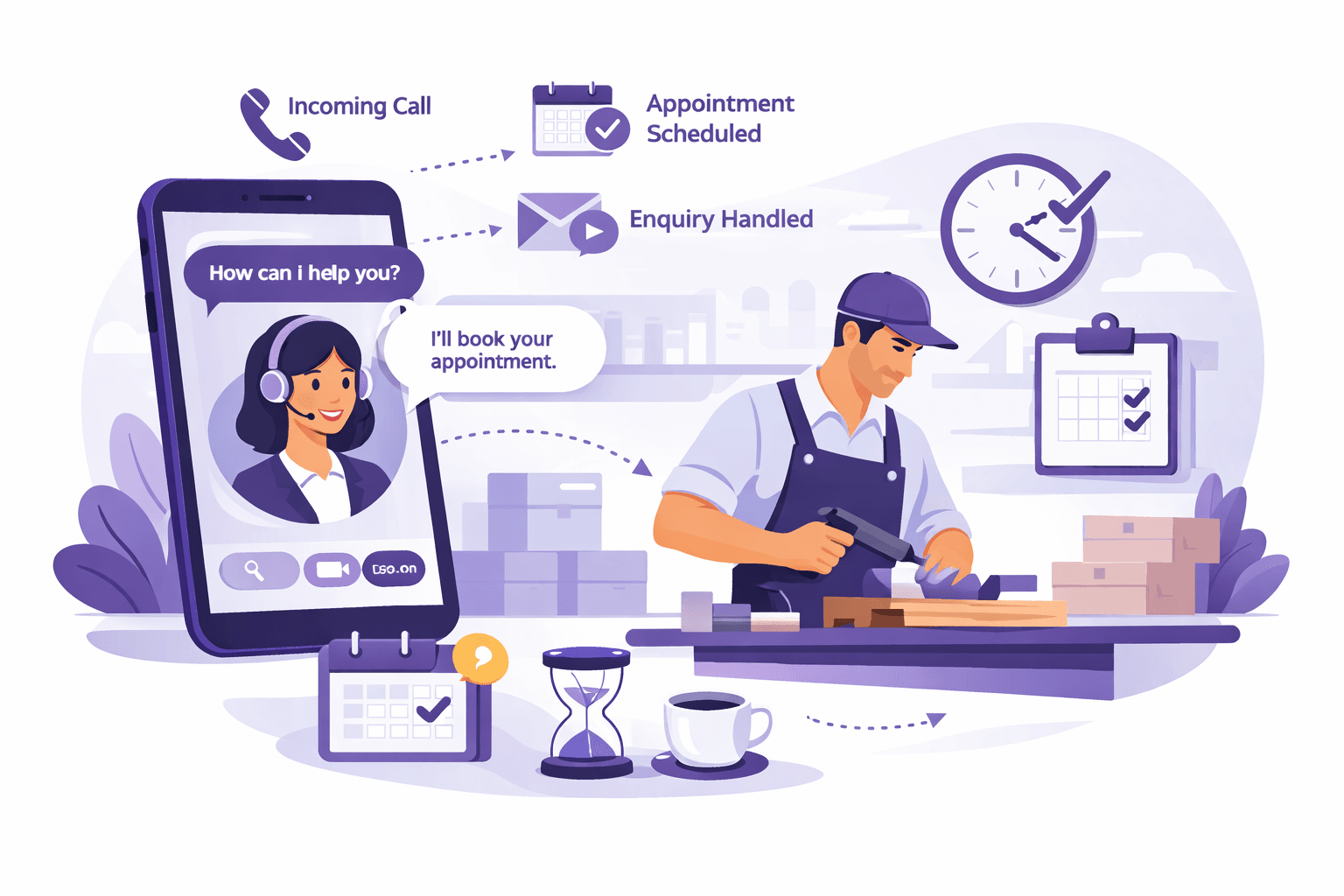
An AI voice receptionist can:
- answer calls instantly
- filter out low-value or routine calls
- pass through real opportunities
- book appointments
- send summaries and follow-up information
- work evenings, weekends and holidays
That last point matters more than many people realise. A traditional receptionist has working hours, takes breaks, goes on holiday and can call in sick. An AI receptionist does not.
For many small businesses, that makes it one of the only realistic ways to get receptionist-level support without the overhead of employing someone directly.
The question also becomes much easier to answer when you look at real use cases.
I worked with an electrician who was taking around 20 calls a day, but only about a quarter were genuine job enquiries. The rest were general questions, availability checks, supplier calls and other interruptions. Once we introduced a voice AI receptionist and filtered the calls more intelligently, he had fewer interruptions, more booked appointments and started getting home before 6pm again.
That is when “worth it” stops being an abstract question.
It becomes a practical one.
If the system helps you:
- win more work
- protect your time
- reduce interruptions
- improve customer experience
- avoid working into the evening
then it is usually worth serious consideration.
Of course, that does not mean every business should rush into it immediately.
If your call volume is very low, if you already have reliable call handling in place, or if your business rarely depends on inbound calls, the value may be lower.
But for many B2C businesses where missed calls often mean missed revenue, the answer is often yes.
This is especially true when poor call handling is one of the reasons a business is already getting enquiries but not customers. If that sounds familiar, that article explains why weak follow-up often causes more damage than owners realise.
If response speed is part of the issue, this guide on how fast you should respond to leads explains why even small delays can reduce conversions.
And if you want the full version of this topic, read Do AI Voice Receptionists Really Work for Small Businesses? for a deeper breakdown of how they work, where they fit best, and when they make the biggest difference.
Want to see whether an AI receptionist would pay for itself in your business?
Last updated: April 2026. Author: Neil Carroll — The On Demand CMO.
Find our articles useful? Help us show up more in your Google results:

